Daddy and Me CC1717 T-shirt Mockup 20
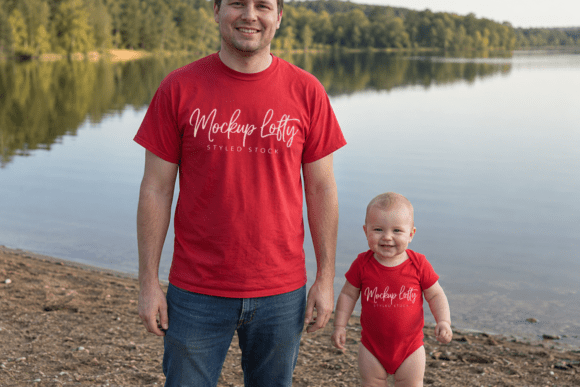
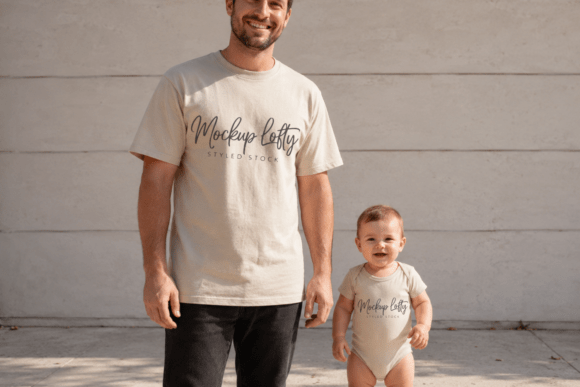
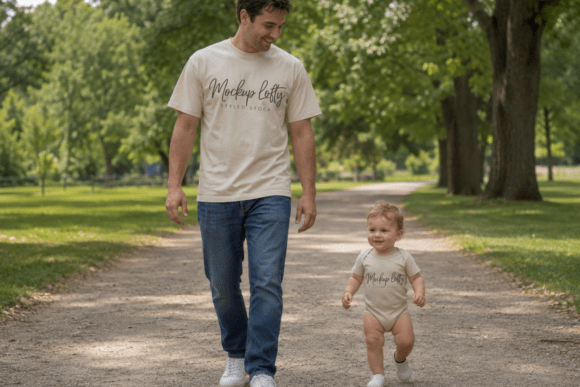
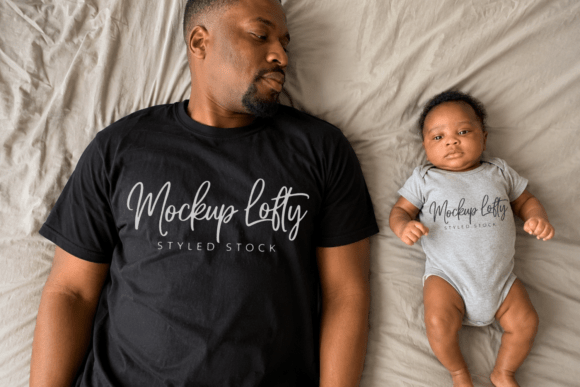
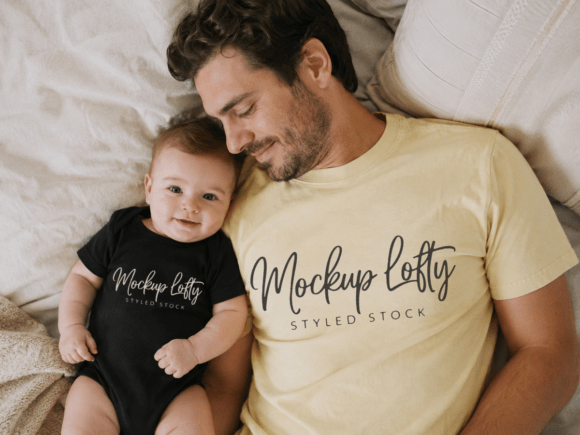
The Daddy and Me CC1717 T-shirt Mockup 20 is a high-resolution, ready-to-use digital template designed to present apparel designs—specifically matching or coordinated father-and-child t-shirts—on the Comfort Colors 1717 “Dad Butter, Baby Black” style. It renders artwork on a clean, front-facing, slightly angled view of two identical shirts worn by adult and youth models (often styled as father and son or parent and child), emphasizing proportion, fit, and minimal aesthetic cohesion. The mockup delivers a realistic yet understated visual representation suitable for branding, marketing, or client presentations.
This mockup belongs to a broader category of apparel mockups used by designers, print-on-demand sellers, small-batch apparel brands, and Etsy shop owners. Unlike editable layered PSD files with smart objects, this version is delivered as a JPEG file at 300 DPI, meaning it’s optimized for print-ready presentation but not for direct layer-based editing in Photoshop. It contains no text, logos, watermarks, or extraneous tags—just the garment, lighting, and subtle shadowing that conveys natural fabric drape and texture.
People often seek out the Daddy and Me CC1717 T-shirt Mockup 20 when they need to quickly and professionally display coordinated family designs—especially those targeting urban, casual, or lifestyle-oriented audiences. Its appeal lies in its specificity: it reflects real product attributes (the Comfort Colors 1717 fabric weight, neckline, sleeve cut, and relaxed fit) while supporting common use cases like Father Son Matching, Boy Dad branding, or Casual Family Shirt campaigns. Because it uses the widely recognized Comfort Colors 1717 silhouette, viewers familiar with the garment can mentally assess scale, placement, and proportion more accurately than with generic or stylized mockups.
One key benefit is consistency. When presenting multiple design variations—such as different colorways or placements across the same shirt style—this mockup ensures visual continuity. That supports stronger family branding and helps customers imagine how pieces work together. It also streamlines workflow: users avoid building custom mockups from scratch or adjusting lighting and perspective across dozens of images. For sellers listing on platforms like Etsy or Shopify, using a realistic, cohesive mockup like this one improves perceived professionalism and may support higher conversion rates compared to flat, untextured previews.
However, there are tradeoffs to consider. As a JPEG-only asset, the Daddy and Me CC1717 T-shirt Mockup 20 does not support non-destructive editing. You cannot change the shirt color, adjust model pose, or isolate elements like sleeves or collar without external photo editing tools. If your workflow relies on batch customization—say, inserting dozens of unique designs into varying shirt colors or angles—this format adds manual steps. In contrast, layered PSD or PNG mockups with smart objects allow drag-and-drop replacement and automatic perspective matching, reducing time per project.
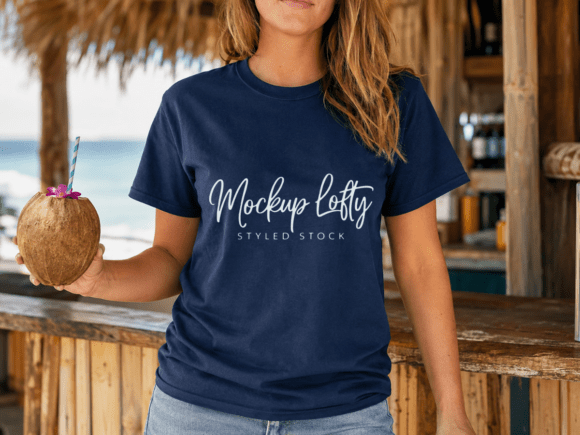
Another consideration is context. While the mockup excels at conveying a calm, minimalist, indoor-lifestyle aesthetic, it doesn’t simulate outdoor, action-oriented, or environmental settings—such as Beach Family Mockup or Outdoor Family Shirt Mockup scenarios. If your target audience engages with apparel in active or seasonal contexts (e.g., hiking, travel, summer events), you may need complementary mockups to round out your visual library. Similarly, the current version focuses on front views only; users needing back prints, sleeve details, or side profiles will need to source additional assets.
This mockup is a strong fit if your goals include: launching a limited-edition Daddy and Me collection with consistent visual language; preparing pitch decks for wholesale buyers who value realism and brand alignment; or building an Etsy storefront where cohesive, high-DPI presentation reinforces trust and quality perception. It’s especially useful for creators already committed to the Comfort Colors 1717 blank—whether for its softness, durability, or market recognition—since the mockup mirrors actual garment behavior under light and movement.
Conversely, alternatives may be preferable if you prioritize flexibility over fidelity. For example, if you regularly produce designs for multiple blanks (e.g., Bella+Canvas 3001, Gildan 5000, or Next Level 3600), a universal mockup pack with swappable garment layers offers greater long-term utility. Likewise, if your audience responds strongly to lifestyle storytelling—such as candid moments, diverse family structures, or multi-generational groupings—you might supplement this mockup with curated photography or scene-based templates rather than relying solely on studio-style visuals.
When evaluating whether the Daddy and Me CC1717 T-shirt Mockup 20 aligns with your needs, ask yourself: Do I primarily use Comfort Colors 1717 for my family apparel line? Is consistency across listings or presentations more valuable than granular editing control? Am I serving customers who respond well to clean, uncluttered, and subtly warm visual cues? If most answers are “yes,” this mockup supports those objectives efficiently. If your work demands frequent variation in garment type, model diversity, or environmental context, investing in a broader mockup suite—or combining this with supplemental assets—may yield better returns.
From an SEO and discoverability standpoint, the mockup is commonly associated with terms like Comfort Colors Daddy And Me Mockup, CC1717 Matching Shirts Mockup, and Trendy Family Apparel Mockup. These phrases reflect real search behavior among designers sourcing assets for niche markets. Using them naturally in metadata, alt text, and surrounding content helps match user intent—especially for those comparing options before purchase. But relevance matters more than keyword density: a mockup only supports your goals if it matches your production pipeline, audience expectations, and brand voice.
In summary, the Daddy and Me CC1717 T-shirt Mockup 20 serves a specific, well-defined role in the apparel design workflow. It balances realism, simplicity, and brand-aligned presentation without unnecessary complexity. Its value emerges not from novelty or feature count, but from how closely it reflects the physical product and use case it represents—making it a practical choice for creators focused on clarity, consistency, and quiet professionalism.