Dark Background White Stars
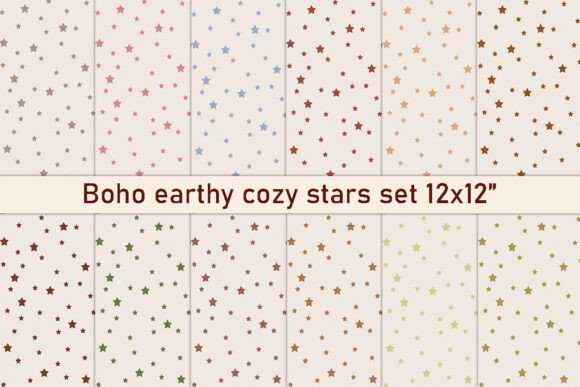
Dark Background White Stars isn’t just a visual motif—it’s a deliberate design decision with functional, psychological, and strategic weight. At its core, it’s a high-resolution seamless pattern: a rich, deep dark backdrop punctuated by precisely scaled, non-repetitive white stars—designed at 3600 × 3600 px, 300 dpi, and delivered as six complementary files in a single ZIP. But its value lies not in resolution alone. It lies in how intentionally applied, Dark Background White Stars supports clarity, contrast, focus, and emotional resonance across real-world creative and operational contexts.
Why This Pattern Earns Strategic Attention
Design choices shape perception before a single word is read or action taken. A dark background with white stars creates immediate visual hierarchy: the stars draw the eye without competing for attention. Unlike busy textures or gradient overlays, this pattern avoids cognitive load while reinforcing themes of depth, calm, wonder, and precision. That makes it unusually versatile—not because it “goes with everything,” but because it serves specific goals with consistency.
For educators building digital lesson slides, Dark Background White Stars provides a low-glare, high-contrast surface that reduces eye fatigue during extended screen time—without sacrificing aesthetic cohesion. For small business owners designing limited-edition product packaging, it conveys premium minimalism and quiet confidence, especially when paired with crisp white or metallic foil text. For freelance designers crafting client presentations, it offers a neutral yet evocative foundation—supporting data visualization, typography, and brand-aligned imagery without visual interference.
When to Use Dark Background White Stars—And When Not To
Timing and context determine whether Dark Background White Stars elevates or undermines your objective. Use it when:
- You need to foreground content—not the background. Its even tonal field ensures text, icons, or layered graphics remain legible and authoritative.
- You’re communicating sophistication, introspection, or timelessness—such as in branding for wellness services, academic publishing, or luxury artisan goods.
- You require scalability across formats: from printed scrapbook pages (where 300 dpi ensures clean halftones) to digital newsletters (where the seamless repeat eliminates visible tiling on responsive layouts).
- You’re building systems—not one-offs. Because it’s delivered as six coordinated files, you can assign distinct star densities or spacing variations to different use cases (e.g., sparse stars for subtle watermarking; tighter clusters for bold cover designs), maintaining visual continuity across touchpoints.
Avoid it when:
- Your audience includes users with low vision or contrast sensitivity—and you haven’t tested accessibility compliance (e.g., WCAG AA minimum contrast ratios for overlaid text). Dark backgrounds demand careful typographic planning.
- You’re designing for environments where ambient light is uncontrolled (e.g., outdoor kiosks or brightly lit retail displays), where dark backgrounds may reduce readability.
- Your message relies on warmth, energy, or urgency. Dark Background White Stars leans into stillness—not motion. It supports reflection, not reaction.
How to Apply It With Intention—Not Just Aesthetics
Intentional use starts before opening the ZIP file. Ask three questions:
- What outcome do I want this background to enable? Is it to slow down scrolling on a landing page? To create tactile elegance in hand-folded gift wrap? To unify a series of workshop handouts? Name the outcome—not the look.
- What will sit on top—and how must the background support it? If overlaying body text, test font weight, size, and letter spacing at multiple sizes. A thin sans-serif may vanish; a medium-weight serif with generous tracking will hold its own. If layering photography, consider how star density affects image depth—too many stars behind a portrait can visually fracture the subject.
- Where will this live long-term—and what maintenance does that require? A junk journaler using Dark Background White Stars for monthly spreads benefits from its print durability and archival compatibility. A blogger embedding it as a site background must confirm CSS handling of seamless repeats across devices—and plan fallbacks for older browsers.
Practical tip: Start small. Print one 8.5" × 11" sheet at actual size. Hold it under your typical working light. Does the star brightness feel balanced—or does it vibrate or recede? Adjust brightness/contrast in your editing software *before* scaling across projects. What works on screen rarely translates identically to paper.
Risks of Using Dark Background White Stars Without Strategy
The biggest risk isn’t technical—it’s misalignment. Deploying Dark Background White Stars as “a nice night sky” without connecting it to purpose leads to inconsistent messaging. A financial advisor using it for client onboarding emails may unintentionally signal detachment or abstraction—when trust and approachability are primary needs. Similarly, an e-commerce brand applying it to product category banners without adjusting star density might dilute scannability, increasing bounce rates.
Another under-discussed risk: overuse across touchpoints without variation. Six files offer flexibility—but using the same star distribution for email headers, invoice footers, and social media banners flattens visual rhythm. Strategic repetition requires subtle evolution. Try rotating among the files—using File 1 for print, File 3 for web, File 5 for embroidery mockups—to sustain recognition without monotony.
Long-Term Value Beyond the First Project
Dark Background White Stars pays dividends over time—not because it’s trendy, but because it’s built for reuse without degradation. Its 3600 × 3600 px dimensions allow confident cropping for Instagram carousels (1080 × 1350 px), Pinterest pins (1000 × 1500 px), or A4 print layouts—without upscaling artifacts. The 300 dpi resolution ensures fidelity whether laser-printed on matte cardstock or embedded in a PDF report viewed on retina displays.
More importantly, it supports brand longevity. Unlike trend-dependent palettes or seasonal motifs, Dark Background White Stars anchors to enduring human associations: night skies evoke curiosity, scale, quiet focus. That makes it resilient across market shifts. A craft supply company launching a new line of astronomy-themed kits can use the same base pattern for packaging, website banners, and educator resource kits—creating cohesion without reinvention.
For freelancers and agencies, it also streamlines client work. Instead of sourcing or generating new patterns per project, Dark Background White Stars becomes a trusted, license-cleared asset—reducing revision cycles and ensuring consistent delivery quality. That’s not just efficiency. It’s reliability codified.
Planning Your Next Use—With Precision
Before downloading or dragging the file into your layout, sketch one constraint-driven application:
- If designing a workshop workbook: Will stars appear only on section dividers—or also as subtle borders around exercises? How will that affect writing space?
- If building a digital course: Which module intro screens benefit most from atmospheric depth—and which need maximum text clarity? Assign different files accordingly.
- If creating custom stationery for a therapy practice: Does the star density support calm, or does it distract from handwritten notes? Test with actual pen strokes on printed samples.
That level of specificity transforms Dark Background White Stars from decorative filler into a functional tool—one that earns its place in your workflow because it solves a problem, not because it looks pretty.
Ultimately, the power of Dark Background White Stars emerges not from its pixels, but from how deliberately you align those pixels with your goals. It doesn’t replace strategy—it amplifies it. When chosen with purpose, tested in context, and applied with discipline, it becomes more than a background. It becomes part of your operational clarity.