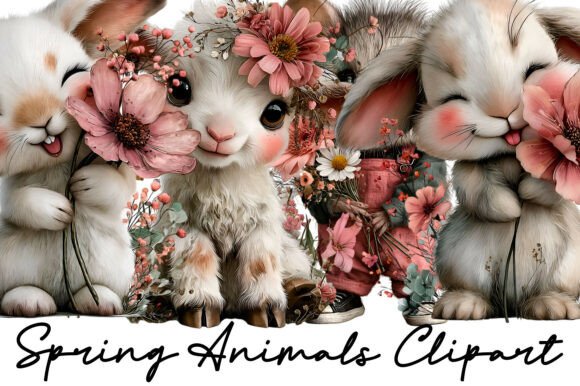
Free Spring Bunny Animals Clipart: A Versatile Digital Resource for Creative Professionals and Educators
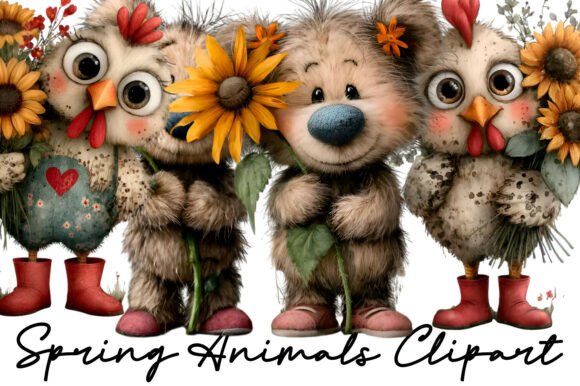
Spring evokes renewal, soft pastel palettes, gentle movement—and few symbols capture its spirit more universally than the bunny. The Free Spring Bunny Animals Clipart collection responds directly to this seasonal resonance with a thoughtfully crafted, production-ready digital asset designed not just for aesthetics, but for functional flexibility across disciplines. Unlike generic vector illustrations or low-resolution web graphics, this set delivers precision, scalability, and contextual readiness—making it especially valuable for users who prioritize both creative control and technical reliability.
What You’ll Receive: Technical Specifications That Enable Real-World Use
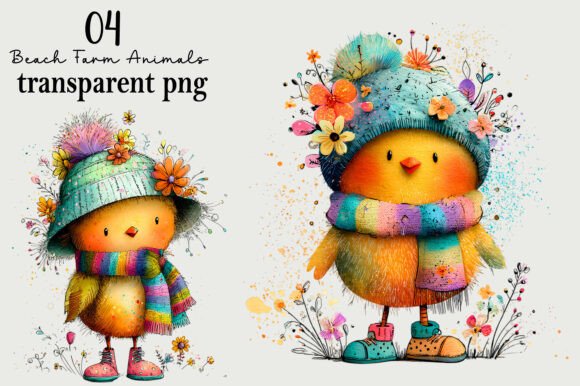
The core offering centers on a single high-fidelity file: File Format 04 PNG Transparent Background. This isn’t merely a “PNG”—it’s a purpose-built raster file engineered for professional workflows. Its resolution is fixed at 300 DPI, ensuring crisp output whether printed on fabric, displayed in large-format presentations, or embedded into layered design documents. The dimensions—3600×3600 pixels—provide ample pixel density without bloating file size unnecessarily, striking a balance between fidelity and manageability.
The transparent background is not an afterthought; it’s foundational. It eliminates the need for time-consuming manual masking or background removal—critical when integrating into multi-element compositions like educational worksheets, branded merchandise mockups, or interactive learning modules. Because transparency is baked in at full resolution, there’s no risk of jagged edges, color fringing, or alpha-channel inconsistencies common in poorly exported assets.
Importantly, this is a digital product only. No physical item will be shipped. That distinction matters: it means instant access, zero shipping delays or customs complications, and seamless integration into cloud-based collaboration environments—whether you’re a solo educator preparing classroom materials or a global design team iterating on seasonal marketing campaigns.
Why Resolution and Transparency Matter Across Applications
At first glance, 3600×3600 pixels may seem excessive for screen use—but that headroom becomes indispensable in practice. Consider a graphic designer creating a limited-edition T-shirt series. When scaled to fit a chest print (typically ~10–12 inches wide), the image retains sharpness even when enlarged beyond standard screen previews. The same holds true for educators printing oversized posters for early-literacy units on life cycles or seasonal change: clarity remains intact at 24-inch display sizes, supporting visual comprehension for diverse learners—including those with low vision or attention-related processing differences.
Transparency extends utility far beyond aesthetic convenience. In digital publishing—such as interactive PDFs for homeschool curricula—the bunny clipart can sit cleanly atop custom gradient backgrounds or textured paper scans without requiring layer adjustments in every new document. For developers embedding assets into web-based learning platforms, transparent PNGs load predictably across browsers and don’t introduce unintended white boxes or layout shifts during responsive resizing.
Practical Use Cases Across Professions
Different users leverage the same asset in distinct, meaningful ways—revealing how technical specifications translate into real impact.
- Educators and Curriculum Designers: Integrate the bunny into printable spring-themed phonics worksheets (e.g., “B is for Bunny”), science unit visuals illustrating animal adaptations, or social-emotional learning posters showing calm breathing techniques with soft, non-distracting imagery. The consistent scale and clean edges ensure alignment across multi-page activity packs.
- Small Business Owners & Print-on-Demand Creators: Use the file directly in Canva, Adobe Illustrator, or Affinity Designer to build ready-to-sell designs for mugs, tote bags, or greeting cards. Because it’s 300 DPI and transparent, no additional prep is needed before uploading to platforms like Printful or Redbubble—reducing time-to-market from days to minutes.
- Hobbyists and DIY Crafters: Resize effortlessly for Cricut or Silhouette Studio projects—cutting vinyl decals for Easter baskets or layering onto scrapbook pages. The square aspect ratio simplifies centering and cropping, while the high resolution prevents pixelation when cutting intricate ear or whisker details.
- Researchers and Presenters: Include the bunny as a subtle, thematic visual anchor in conference slides about ecological literacy, childhood development studies, or cultural symbolism of seasonal motifs. Its neutral presentation avoids unintended anthropomorphism while retaining recognizability.
Resizing Without Compromise: How Software Compatibility Supports Workflow Integrity
One of the most frequently underestimated challenges in digital asset use is maintaining quality during transformation. Many free clipart downloads degrade visibly when upscaled—even slightly—due to interpolation artifacts or compressed source files. The Free Spring Bunny Animals Clipart avoids this entirely because its native size and resolution are intentionally generous.
Whether you’re using free tools like GIMP or Photopea, subscription-based suites like Adobe Photoshop or Affinity Photo, or browser-based editors like Canva, the 3600×3600 canvas provides substantial buffer room. Downscaling (e.g., to 1800×1800 for web banners) preserves edge definition and color integrity. Upscaling is rarely necessary—but if required for specialty applications (like large-scale wall decals), modern software handles interpolation smoothly thanks to the clean, high-DPI starting point.
This compatibility isn’t incidental. It reflects intentional formatting: no embedded fonts, no proprietary layers, no locked elements. Just a flat, optimized PNG—universally legible, reliably renderable, and consistently editable across operating systems and devices.
Contextual Relevance Beyond Decoration
Clipart often carries assumptions of simplicity—or even obsolescence—in professional circles. Yet the Free Spring Bunny Animals Clipart exemplifies how a seemingly basic asset gains sophistication through context-aware design. Its soft outlines, balanced proportions, and absence of text or branding allow it to function as a neutral visual signifier rather than a prescriptive illustration.
In inclusive education settings, for instance, the bunny avoids culturally specific clothing or exaggerated expressions that might distract from core learning objectives. In branding contexts, it serves as a gentle nod to seasonality without locking a business into narrow thematic constraints—ideal for wellness studios launching spring mindfulness programs or local farms highlighting seasonal produce boxes.
Moreover, its “free” designation doesn’t imply diminished value. Rather, it signals accessibility—removing financial or licensing barriers for users who need dependable, rights-cleared imagery without navigating complex attribution requirements or restrictive commercial clauses. That freedom supports experimentation, iteration, and rapid prototyping—key drivers of innovation in both pedagogy and product development.
Considerations for Ethical and Effective Implementation
While the technical advantages are clear, thoughtful implementation requires attention to audience and intent. For example, educators working with neurodivergent students should consider contrast ratios when placing the bunny over colored backgrounds—ensuring readability for those sensitive to visual clutter. Designers applying the clipart to apparel should verify garment-specific bleed and safe-zone guidelines, as the 3600×3600 dimensions require intentional framing—not automatic centering.
It’s also worth noting that “spring bunny” iconography carries layered meanings across cultures and belief systems. Using the asset respectfully means avoiding reductive associations (e.g., conflating bunnies solely with commercialized holidays) and instead anchoring its use in observable natural phenomena—hibernation emergence, plant pollination, or habitat renewal. This approach reinforces scientific accuracy while honoring symbolic resonance.
Support and Adaptability in Practice
Because creative needs evolve—and because no two projects follow identical paths—the availability of direct support adds tangible value. If you're adapting the bunny for multilingual flashcards and need guidance on non-destructive text overlay techniques, or if you're troubleshooting transparency rendering in a specific version of CorelDRAW, assistance isn’t relegated to static documentation. Real-time clarification helps prevent workflow bottlenecks and reinforces confidence in long-term reuse.
This responsiveness mirrors broader best practices in digital resource stewardship: treating assets not as static endpoints, but as living components within dynamic, human-centered processes. Whether you're iterating on lesson plans mid-semester or refining a product line ahead of peak retail seasons, knowing that questions are welcomed—and answered—supports sustainability in both creative output and professional growth.
Final Thoughts: Utility Rooted in Precision
The Free Spring Bunny Animals Clipart succeeds not because it’s novel in subject matter, but because it resolves persistent friction points: inconsistent scaling, unreliable transparency, ambiguous licensing, and poor cross-software behavior. Its strength lies in what it removes—guesswork, remediation steps, compatibility checks—rather than what it adds.
That makes it especially valuable for time-constrained professionals: teachers building units during planning periods, designers managing overlapping client deadlines, researchers assembling grant proposals under tight timelines. It offers certainty—a known quantity that behaves as expected, integrates without surprises, and delivers consistent results across outputs.
In an era where digital fatigue is real and attention spans are fragmented, reliability isn’t a luxury—it’s a prerequisite for meaningful creation. The bunny, rendered at 300 DPI with flawless transparency and ready for immediate resizing, becomes more than an image. It becomes infrastructure.